

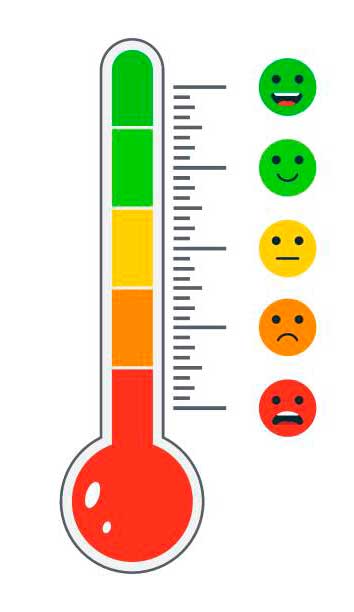
There are a large number of substances that cause addiction, some legal and others not. When ranked by their potential to create addiction and health risks, these would be the main ones from least to most dangerous:
-
Cannabis.
-
Tobacco (nicotine).
-
Alcohol.
-
Cocaine.
-
Amphetamines and benzodiazepines.
-
Designer drugs such as: methamphetamines, ecstasy, ketamine, etc.
-
Opiates: heroin, fentanyl.
Cannabis vs Tobacco
Without a doubt, our beloved plant is perhaps the substance that poses the least health risks compared to the rest. Comparing cannabis (marijuana) and tobacco involves analyzing different health risks, levels of addiction, and effects on the body.
Although both are smoked and share harmful components in their smoke, there are key differences in their mechanisms of action and long-term effects.
Below are the main comparisons based on the most recent studies on addiction and dependence:
-
Tobacco: It is highly addictive due to nicotine. Approximately 30% of users develop dependence.
-
Cannabis: It has a lower addictive potential, estimated at around 9% of users, although the risk increases in daily or long-term users. However, "cannabis use disorder" is real and can cause withdrawal syndromes similar in intensity to those of tobacco (anxiety, insomnia, irritability).
Alcohol
Continuing with our ranking and based on scientific and public health studies, alcohol addiction is generally considered worse than cannabis addiction in terms of toxicity, physical danger, withdrawal syndrome, and mortality.

Tobacco is more addictive and harmful to health than cannabis.
Photo of Pawel Czerwinski en Unsplash
Photo of Pawel Czerwinski en Unsplash

Cocaine vs. amphetamines and benzodiazepines
Determining which substance is "worse" depends on the criteria used for comparison (addiction, acute toxicity, long-term effects). Both amphetamines and benzodiazepines carry significant risks that, in certain aspects, may be more severe than those of cocaine.
There is no single answer as to which is "worse," since each presents different dangers:
-
Amphetamines are extremely dangerous due to their potency, duration, and severe long-term cardiovascular and brain effects.
-
Benzodiazepines are particularly dangerous due to the high risk of fatal overdose, especially when combined with other depressant substances, as well as their addictive potential and difficult withdrawal process.
-
Cocaine is also a very dangerous and addictive drug, but methamphetamine, for example, is considered more dangerous by some experts.
Opioids
And so we arrive at what is considered the most dangerous substance in the ranking: opioids, whose most classic representative is heroin.
Heroin use represents one of the greatest global public health challenges, generating devastating physical, mental, and social effects.
As a highly addictive opioid, its impact ranges from fatal overdose to the spread of infectious diseases (AIDS, hepatitis, etc.) and social degradation.
However, alongside another opioid—morphine—used in medicine, fentanyl has emerged with unstoppable force: a powerful synthetic opioid designed in laboratories, primarily used in medicine as a fast-acting painkiller for severe pain, especially after surgery or for patients with advanced cancer. Its main characteristic is extreme potency: it is approximately 100 times stronger than morphine and 50 times more potent than heroin.
To more clearly demonstrate the danger to public health posed by all these substances, with their high mortality rates among users, we can refer to one of the most recent statistical studies conducted in the United States in 2025 by the NIDA (National Institute on Drug Abuse), where the chart we present shows how the number of deaths among users has grown exponentially in recent years, especially following the emergence of fentanyl.
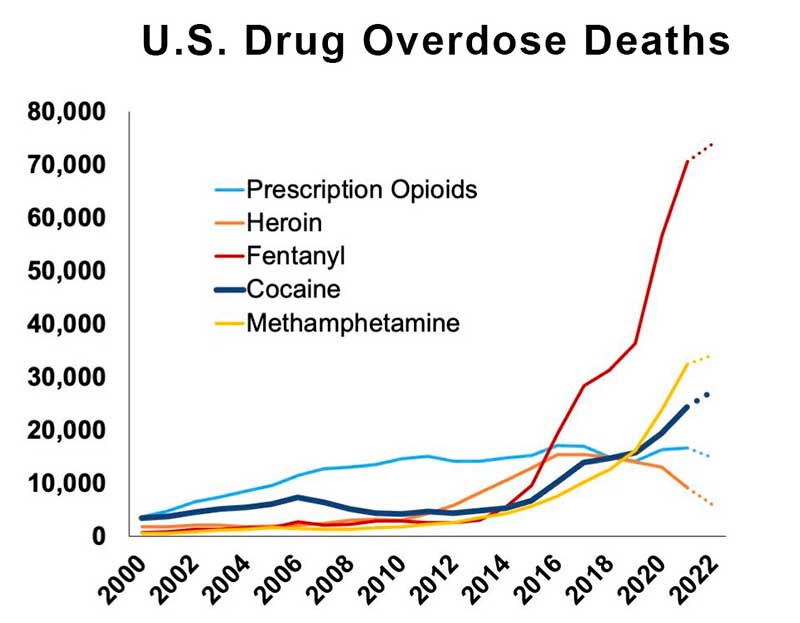
Source: The National Institute on Drugs and Addiction (NIDA) 2025