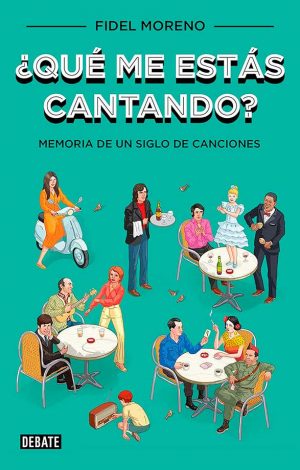
In this second installment, we continue moving forward in a concise and entertaining way through the cannabis history of Spain. In the previous and first article of this series, we stopped at the beginning of the 1970s, so let us continue our journey through time. Maestro, let the music continue!
In the 1970s, the hashish era begins
In 1973, Spain adapted its Penal Code to the Single Convention on Narcotic Drugs, and one year later the Supreme Court ruled that personal consumption did not fall under the so-called “crimes against public health.” This Supreme Court decision made Spain, in 1974 and through one of history’s ironies, the first European country to decriminalize consumption. But let’s not fool ourselves: drugs were still illegal, and if you were caught using them in public, the Social Dangerousness Law could be applied to you; however, if you were caught consuming them in private, you avoided prison.
Although the social stigma still weighed heavily, identifying oneself as a joint smoker no longer carried legal consequences, and the anti-conventional, communal, and generational spirit associated with smoking hashish among a youth overflowing beyond the limits of the already dying Francoist regime gave “mandanga” a starring role in rumba music. For example, Los Chunguitos introduced themselves in 1974 with the fast-paced single “It Tastes Like Smoke to Me”.
The little “candies” of grifa and the pre-rolled firecrackers had given way to hashish joints. In the mid-1970s, growers in the Rif began producing hashish in the same way it was made in Lebanon, a hugely significant development that would eventually turn Morocco into the world’s leading exporter of the concentrate.
Although consumption had been decriminalized, alongside its growing popularity the police exponentially increased their resources to pursue drug sales, making it more convenient for traffickers to import the substance concentrated into hash tablets rather than bulky bundles of grifa.
As a consequence, from then until the late 1990s, it became rare to see marijuana buds in Spain. The dominance of hashish would define several generations of Spanish joint smokers.
There is the censored cover of Veneno’s first album (1977), or Los Mánager de Huelva, whom Pata Negra sang about—those disastrous managers whose blunders were explained in the pasodoble as the result of being wasted from alcohol and cannabis resin: “Must be from so many mixed drinks and so much pollen, so much pollen.”
Some people mistakenly attribute to Fary the merit of creating the first song about joints in Spain, but “La Mandanga”, as this rumba was called, dates from 1979. Rather than announcing something new, in prime-time television programs from the Valerio Lazarov era on Spanish TVE, it portrayed how widespread joint smoking had become among the youth of those years:
After twenty minutes had passed, without knowing how or why
With the aroma of the smoke, I got high too
The youngsters told me, come here and sit down
I took a hit of the mandanguita and my shyness disappeared
Come on, give me the mandanga and forget the tea
Give me the hash that makes me feel good
Give me the dark one with the nice smell
Because with marijuana, what a high
The democratization of the joint arrives in the 1980s
With the economic development and openness of the democratic transition, grifa gave way to hashish, and the hippies and trendsetters who had replaced the grifotas as the stereotypical stoner began sharing their place in the collective imagination with the carefree “pasotas.”
Also entering the scene were the rootless petty delinquents, who smoked joints heavily, like the youngsters in Carlos Saura’s film “Fast, Fast” (1981), or like El Jaro, the thug in tight trousers portrayed by Sabina in “Way Too Much” (1980), who lived life “as a tough guy and a thug, a rogue and a thief, and smoking plenty of joints.”
In the 1980s, the joint became popular and evolved from a marginal songbook of Roma rumbas and juvenile delinquents into a far more widespread and cross-cultural reality within the national music scene and among the different types of singers addressing the subject in their songs.
But without a doubt, it was Joaquín Sabina, the leading songwriter of this golden musical decade in Spain during the rise of the “Movida Madrileña,” who synthesized and democratized the use of joints in many of his most prestigious songs.
Thus, the juvenile delinquent would not be the only cannabis-related reference to slip into Sabina’s repertoire, where secret lovers wait for each other in hotel rooms with well-packed joints: Hotel, Sweet Hotel; or where a couple of squatters find paradise in an apartment in Moratalaz, growing Ketama hemp seeds on the balcony, and where a youthful past of laughter and kisses is remembered through rhyming stoner verses: With a Weathered Brow:
We planted Ketama hemp seeds
and a plant grew by the window
with a branch from the tree
of the knowledge of good and evil
Sitting in a circle we feasted on kisses and joints, and the hours passed
quickly between smoke and laughter.
The stigma was also reflected in the censorship of the time. Thus, the song The Man, the Bear and the Strawberry Tree (1985), by Javier Krahe, was released on his album Corral de cuernos without its final verse, deliberately mutilated by CBS.
The censored lines read: “Pass me that hash, hash, so we can smoke here in the capital”, and this act of censorship led the uncompromising singer-songwriter to leave the record label.
Javier Krahe is important in this story because he was one of the members of the Anti-Prohibitionist List, the Spanish branch of the electoral experiment advocating for drug legalization that originated in Italy under the initiative of the Radical Party. The list managed to obtain 3,330 votes in the 1989 general elections.
During the summer of 1989, the group No me pises que llevo chanclas became famous, among other songs, for Bolillón, which told the story of a guy who gets heavily stoned after smoking several pieces of hashish that had fallen from the pockets of drug dealers he encounters in the labyrinthine Santa Cruz neighborhood of Seville. Its catchy chorus, “bolillón, bolillón, bolillón,” was sung with enthusiasm throughout Andalusia, and the local slang term—synonymous with being high or wasted—became popular all across Spain.
Well, with this “Bolillón” leaving us a little dizzy, we have reached the end of this second installment of our sung history. Once we are a bit more sober, we will continue singing and telling you more in our next Blog publication.
TO BE CONTINUED →