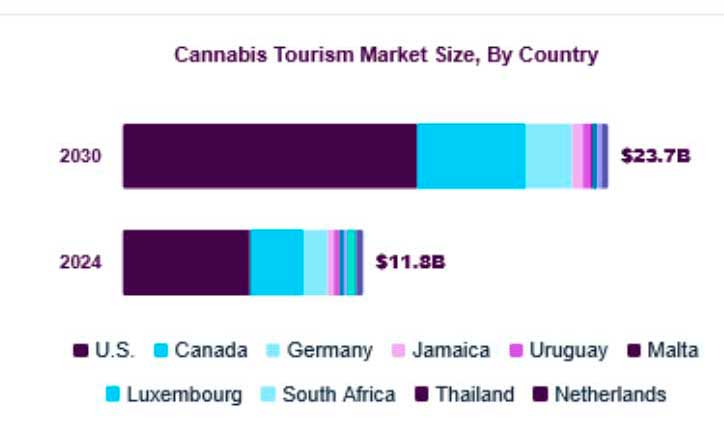
California-based consultancy Grand View Research suggests that global cannabis tourism could reach a value of nearly $23 billion USD by 2030.
Indeed! The marijuana industry is a booming market, generating wealth and numerous opportunities from a sector that had long been blocked.
In Canada, for instance, the legal marijuana market contributed over $8 billion to the country's GDP in 2024. In Thailand, the *Bangkok Post* estimates that just 10% of registered cannabis plantations generate more than 20 million baht for the local economy. And these figures are projected to keep rising.
In a previously published blog post—The Cannabis Business: Another Reason to Legalize—we analyzed the economic significance of the burgeoning cannabis industry as a key factor to consider when weighing potential legalization.
However, that article did not factor in the tourism sector—yet another area where the economic impact of our beloved plant can play a major role.
Beyond generating revenue, cannabis tourism creates job opportunities—not only in sectors directly linked to marijuana cultivation, manufacturing, or sales but also in related industries such as hospitality and wellness, among others.
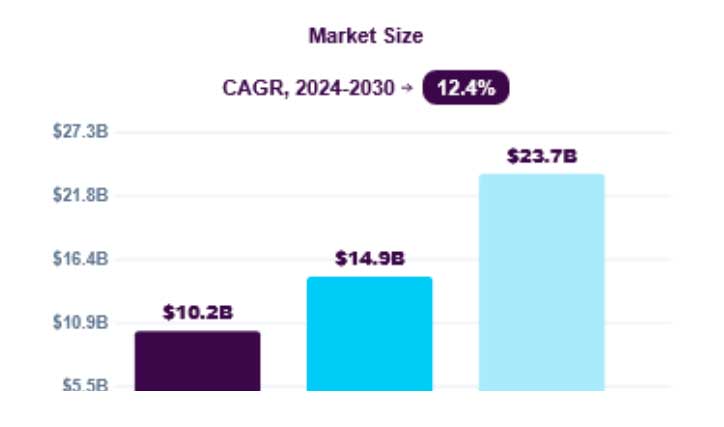
In 2023, Grand View Research estimated the global cannabis tourism market at USD 10.23 billion, with a projected annual growth rate of 12.4% through 2030.
Distribution Channel Insights
The privately owned distribution channel segment accounted for the largest revenue share (over 38% in 2023) and is expected to record the fastest compound annual growth rate (CAGR) during the forecast period.
Privately owned dispensaries and tour operators are expected to offer a more personalized and tailored experience for cannabis-interested tourists, catering to their specific preferences and needs.
This will enable the development of unique cannabis-themed attractions, events, and activities designed to appeal to a growing segment of travelers seeking cannabis-related experiences.
As the industry matures, private distribution channels are expected to play a pivotal role in shaping the cannabis tourism landscape and meeting the evolving demands of this emerging market.
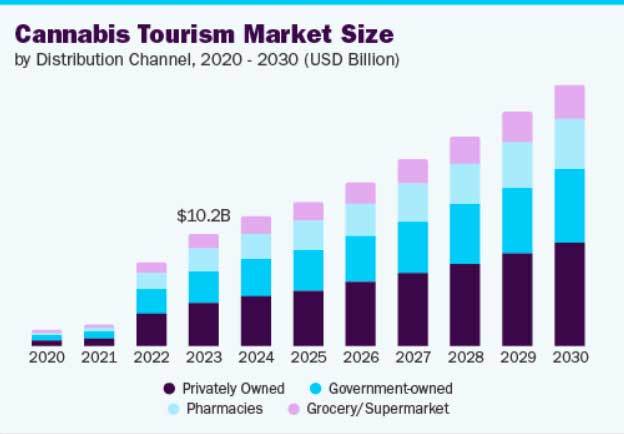
Meanwhile, the government-owned segment is expected to experience significant growth during the forecast period. Countries such as Canada have state-run retailers (like the LCBO) that control cannabis sales. This provides a safe and regulated environment for tourists to access cannabis products.
Destinations are expected to leverage these channels to promote cannabis tourism experiences, such as guided tours and events. Thanks to clear regulations and oversight, state-led distribution will foster responsible cannabis tourism that benefits both visitors and the local community.
Analysis by age group
Regarding age groups, the 25–44 segment led the market with a revenue share of over 44% in 2023 and is projected to record the highest compound annual growth rate (CAGR) during the forecast period. This demographic is expected to drive market growth, given that it represents a significant portion of current cannabis consumers.
As cannabis becomes legal in more U.S. states and other countries, this segment is expected to continue seeking out cannabis-friendly tourist destinations, thereby fueling the rise of cannabis tourism globally.
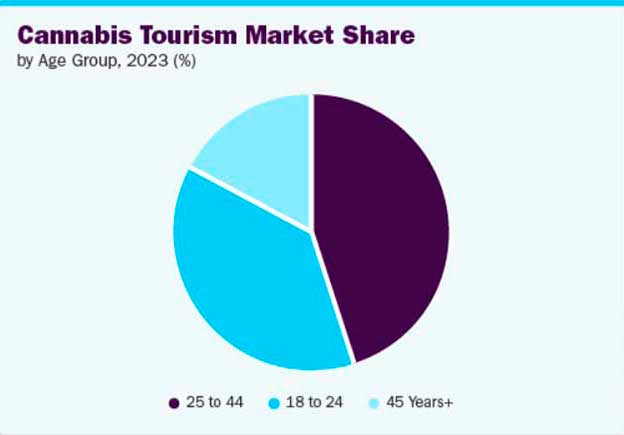
The 18-to-24 age group is also expected to see significant growth in the coming years, driven by support for recreational marijuana within this demographic. According to the University of North Florida, 86% of young people aged 18 to 24 support the legalization of cannabis.
As more jurisdictions legalize recreational cannabis, this demographic is increasingly likely to seek out cannabis-friendly travel experiences, such as tours, events, and cannabis-themed accommodations. With the growing normalization of cannabis use, this younger demographic is expected to continue shaping the emerging cannabis tourism market.
Conclusion
The data and figures presented in the study are highly revealing; however, it is important to note that these projections focus heavily on the emerging markets of the U.S. and Canada (as shown in the article's final graph). These countries hold a clear lead over the rest of the world—including all European nations—regarding cannabis legalization and the cannabis industry.