

We continue our cannabis tourism journey around the world with our final stop in the vast Asian continent. Unfortunately, most countries in this region are not suitable for cannabis enthusiasts, with Thailand being the only country in Asia where cannabis has been decriminalized to a certain extent.
Thailand
In 2022, Thailand became the first Asian country to decriminalize cannabis. Shortly afterwards, cannabis shops, cafés, and social lounges began appearing throughout the country, offering food, beverages, wellness products, and cannabis flowers.
Technically, Thai law originally allowed the sale of hemp and cannabis products with low THC content, although the legal framework was not initially well defined.
As visitors, there are two key points we should clearly understand:
Has Thailand legalized recreational cannabis?
According to the Thai government, the primary objective of cannabis legalization is for medical and therapeutic purposes. While the Royal Thai Police have allowed people to consume cannabis in private residences, recreational use remains in a legal gray area. For example, smoking cannabis in public may result in a fine of up to approximately €680 and up to three months in prison, as it is considered a public nuisance offense.
What does cannabis legalization mean for tourism in Thailand?
Things initially looked promising in Thailand, but the legal restrictions introduced following the 2025 revision of the cannabis legislation have significantly limited the country's ambitions of becoming the "Amsterdam of Asia"—at least for the time being.
In this regard, Thai authorities have clearly stated that: "If you're coming to Thailand simply because you've heard cannabis is legal or because you think you can freely smoke joints, you're mistaken."
As a result, visitors should exercise extreme caution. Although tourists may still find cannabis products openly available in certain licensed shops, it remains strictly illegal to consume cannabis in public or to bring it into or take it out of the country.
For these reasons, our most sensible recommendation is:
-
Do not buy or consume cannabis flowers, even if they are openly displayed for sale.
-
Do not carry cannabis with you or transport it, even if it has been given to you as a gift.
-
Avoid entering establishments that openly promote unrestricted cannabis sales.
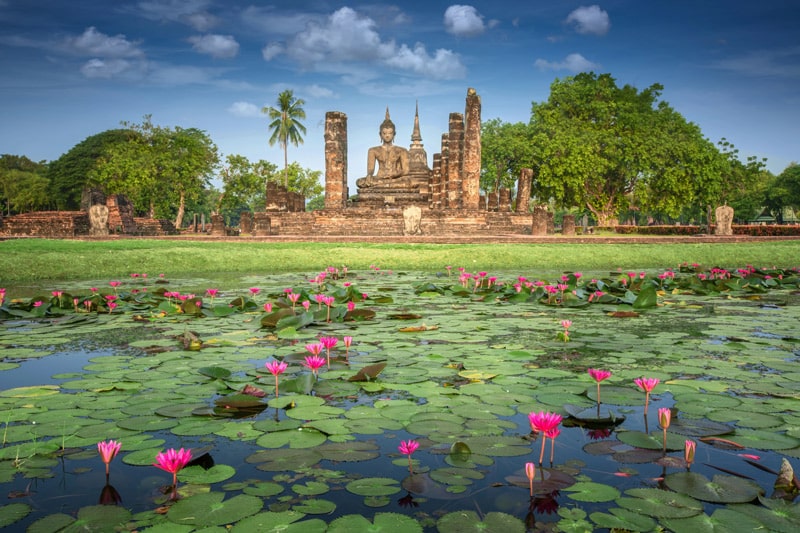
Ayutthaya, located about 80 kilometers from Bangkok, boasts several must-visit temples, such as Wat Chaiwatthanaram, Wat Na Phramen, and Wat Phra Si Sanphet, among others.
Asia: A Continent with Many Destinations Not Recommended for Cannabis Travelers
Don't be misled by rumors or what you see on social media: cannabis remains heavily prohibited across much of Asia. In many countries, the possession, use, or trafficking of marijuana can lead to severe legal consequences, ranging from substantial fines and lengthy prison sentences to, in some cases, the death penalty.
If you are planning a trip to Asia and you are a cannabis user, the safest approach is to abstain completely and always respect local laws. These are some of the countries where cannabis legislation is particularly strict:
-
Singapore
Singapore has one of the strictest drug laws in the world. Possession of cannabis can be punished with up to 10 years in prison, substantial fines, or both. Trafficking certain quantities may carry the death penalty, and authorities may also take action if THC is detected in the bodies of its citizens or permanent residents.
-
Indonesia
Marijuana remains illegal, and possession can result in lengthy prison sentences. In cases involving drug trafficking, the law even provides for the death penalty.
-
Malaysia
Malaysia's drug laws are extremely strict. Possession of certain quantities of cannabis may be treated as drug trafficking, an offense punishable by very severe penalties, including the death penalty in certain circumstances.
-
Philippines
Cannabis remains illegal, and possession can result in significant prison sentences. Although anti-drug policies have evolved in recent years, the legal framework remains highly restrictive.
-
Saudi Arabia
Saudi Arabia maintains a zero-tolerance policy toward drugs. Possession or consumption of cannabis may lead to prison sentences and other severe penalties, while drug trafficking offenses are dealt with particularly harshly.
-
United Arab Emirates
Possession or consumption of cannabis is prohibited and may be punished with prison sentences and substantial fines. In addition, the authorities enforce a very strict policy regarding all narcotic substances.
-
China
China enforces a very strict anti-drug policy. The use, possession, or trafficking of cannabis can result in severe criminal penalties, and drug trafficking offenses are punished with the utmost severity.
-
Japan
Japan has some of the strictest cannabis laws among developed countries. Possession of cannabis can result in several years of imprisonment, and Japanese society continues to strongly stigmatize this type of behavior.
-
South Korea
The use and possession of cannabis are prohibited. In addition, South Korean law may prosecute its citizens even for consuming marijuana in countries where it is legal.
-
Turkey
Recreational cannabis remains illegal. Possession for personal use may result in criminal proceedings, mandatory treatment programs, or prison sentences, depending on the circumstances of the case.
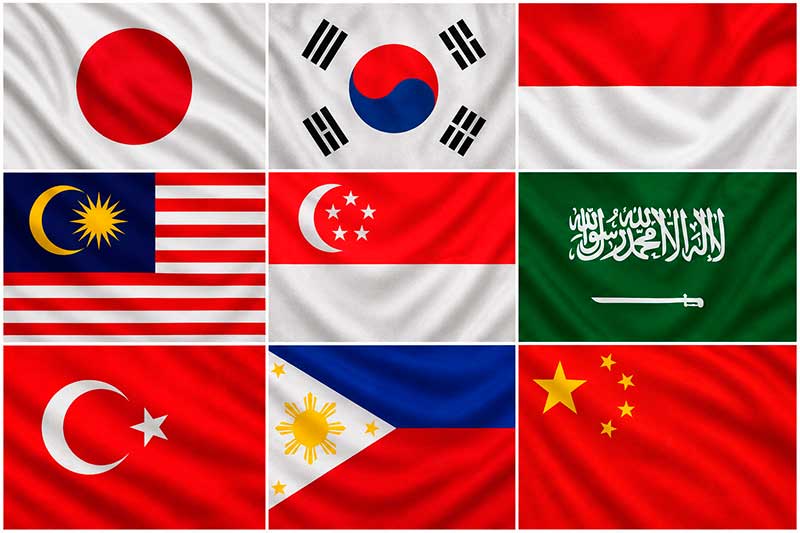
A tourist visit to any Asian country is essentially not recommended for a cannabis traveler,particularly those listed in this article.