

Despite the progress made over three decades, the Spanish cannabis movement has continually faced obstacles of various kinds.
Associations and growers have been under the constant threat of criminal proceedings. Many prominent figures within the movement have faced legal proceedings.
The Civil Guard launched operations against grow shops, with dozens of stores being searched, and there were also coordinated raids targeting national seed banks. Several associations were also raided and abruptly shut down.
Prominent activists have been arrested and convicted. Fernanda de la Figuera (“the grandmother of cannabis”) was arrested in 2018 for growing cannabis for patients and faced a high-profile trial; Albert Tió and other members of the Federation of Associations of Catalonia were convicted in 2019 and imprisoned in 2020, until they received a partial pardon in 2022.
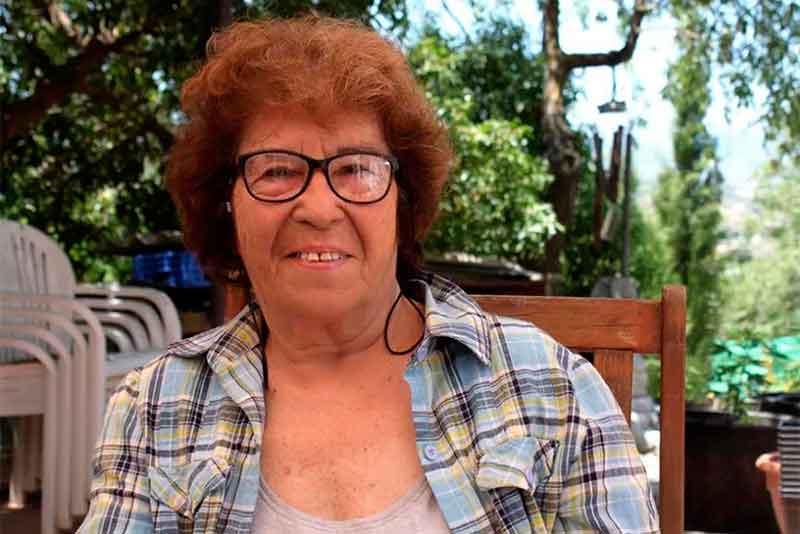
Fernanda de la Figuera founded several associations and political parties advocating for the legalization of cannabis.
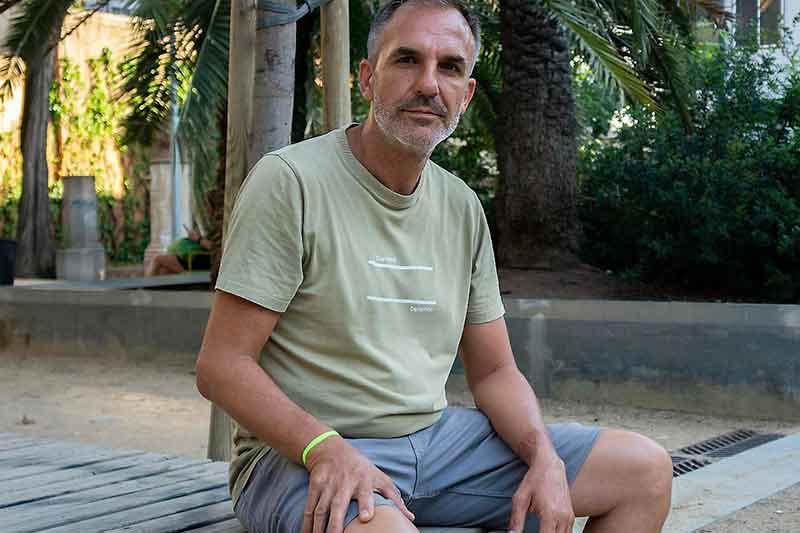
Tió was one of the promoters of the grassroots initiative that led to the CSC law passed by the Catalan Parliament in 2017.
Each of these cases had an intimidating effect on the movement. The absence of regulation leaves considerable room for interpretation.
Some Provincial Courts have acquitted CSCs by applying the doctrine of shared consumption, while others have issued convictions. This legal uncertainty is itself an obstacle, as it makes it difficult for associations to plan their activities over the long term.
The Citizen Security Law (both the 1992 and 2015 versions) has established a system of fines that affects consumers. It is estimated that tens of thousands of penalties are imposed every year for possession or consumption in public places, resulting in both financial punishment and stigmatization.
Discriminatory Police Actions
User groups have reported that the police sometimes apply these penalties in a discriminatory manner. In addition, reforms to the Criminal Code in 2010 and 2015 tightened certain provisions. The introduction of the offense of “unlawful association” has been used against 365 CSC boards of directors, while the concept of a criminal organization has been invoked against self-cultivation groups.
For a long time, the social image of the “stoner” has been negative in Spain, associated with marginalization or irresponsibility. Activists have had to confront alarmist health-related narratives and the inertia of decades of prohibitionist policies.
It has also been difficult to involve professionals (doctors and educators) in a debate free from prejudice. Nevertheless, this barrier has gradually diminished. Recent surveys show that a majority of Spanish society supports the legalization of medical cannabis, while an increasing percentage also supports recreational use.
Lack of Political Will
Despite this, political obstacles remain. No major Spanish political party has fully embraced the cannabis agenda. Successive governments, concerned about the potential electoral cost, have avoided addressing reforms, effectively maintaining the prohibitionist status quo.
This lack of political will has perhaps been the greatest obstacle, forcing the movement to operate on the margins of legality for decades. Spain is a signatory to the drug-control treaties of the United Nations (UN), which limit the options for legalization.
Whenever a proposal to regulate cannabis is put forward in an autonomous community or in Congress, the argument of international commitments arises. Although countries such as Canada and Uruguay have reinterpreted these treaties and moved forward, in Spain they are still perceived as a legal obstacle that needs to be resolved, requiring at least decriminalization at the national level before any treaty obligations are breached.

