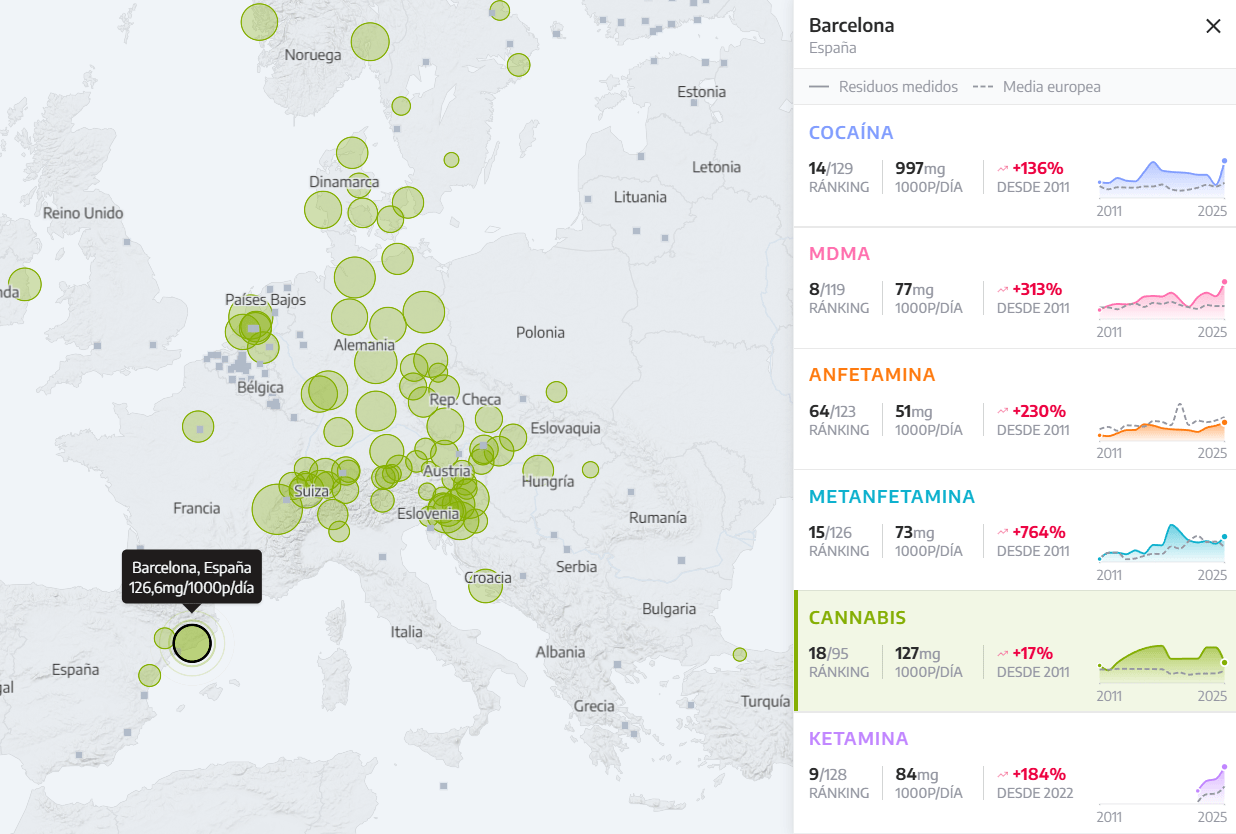
Four Spanish cities appear among the 15 European cities with the highest traces of cocaine in wastewater in the latest European drug report; experts warn about the rise in ketamine use, which has increased by 41% in one year across Europe and has tripled in Barcelona since 2022.
Many people do not know that a common method for measuring the presence of a drug in society is to analyze wastewater. The tests do not look directly for the drug in the water, but for the metabolites produced and released by the body after consumption.
This rules out exaggerated data caused by someone flushing, for example, a large quantity of drugs down the toilet, as we often see in movies.
Some question the reliability of the method, but experts say that for this matter it is far better to trust excrement than the honesty of people in a survey.
The four Spanish cities that appear among the 15 European cities with the highest traces of cocaine in the analyzed water are specifically: Lleida in third place; Granada in fifth place; Santiago de Compostela in eleventh place; and finally Barcelona in fourteenth place.
All of this data, published on March 18 by the European Union Drugs Agency (EUDA), is thoroughly collected and analyzed in an excellent article published by elDiario.es, which reveals the latest trends in drug use across the continent based on wastewater analysis in 130 cities from 28 European countries. Here you can find all the information and the full map.
Ketamine, the new narcotic on the rise
Ketamine, a synthetic dissociative anesthetic drug used in human and veterinary medicine, and more recently to treat resistant depression, has grown by 41% overall across Europe, becoming a major concern among many experts, since its recreational use carries high risks of addiction and hallucinogenic effects.
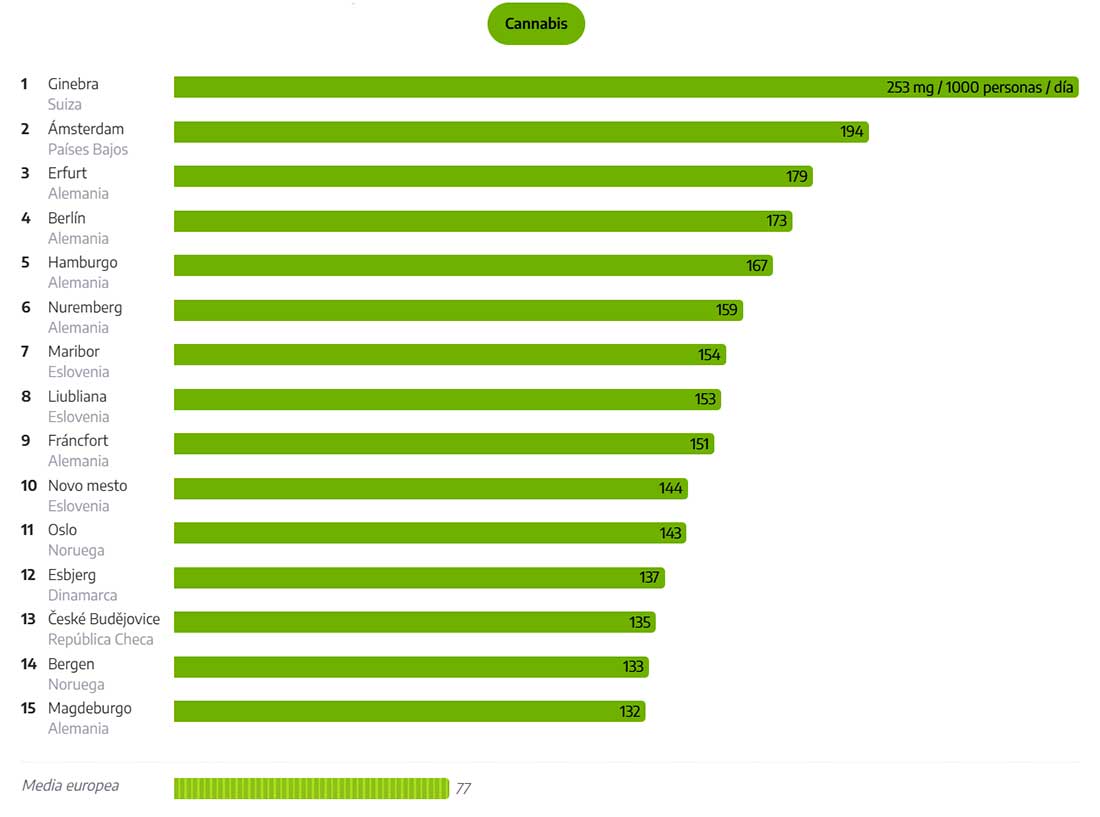
The study finally highlights that cannabis, the most widely used drug, has declined slightly, thanks to having been regulated in some way in several European countries.
This latest data on cannabis use disproves the most alarmist arguments of those opposed to the legalization and regulation of our beloved plant, who promote the false idea that legalization would lead to a greater increase in its consumption.
In this regard, concerning Spain, it should be noted that in the EUDA study, no city from our country appears in the ranking of the 15 main European cities with the highest cannabis consumption, as can be seen in the attached chart.