

From Central Asia to the islands of the Caribbean, cannabis has accompanied humanity in its expansion across the world. Cultures all over the planet have adapted it to rituals, religions, and the arts, always associated with mysticism, spirituality, and contact with a god.
One of the meanings of the word journey refers to the “state resulting from having taken a hallucinogenic drug”. This journey, undertaken without movement, contradicts the very essence of its primary meaning: “a transfer from one place to another by land, sea, or air.”
Marijuana, in addition to having prompted numerous hallucinogenic journeys for its consumers, has itself, as a botanical species, made a long journey through space and time, from its distant emergence in Central Asia to becoming part of contemporary Western societies. A long and complex history that can be traced through cultures occupying extreme landscapes.
There is agreement that the cannabis plant was domesticated in the center of the Asian continent some 14,000 years ago, during the Stone Age, in the southern Mongolian region, in the harsh lands stretching between the Gobi and Taklamakan deserts and the Himalayas, in an area where Kazakhstan and Tajikistan meet, with Afghanistan to the west and the Chinese region of Xinjiang to the east.
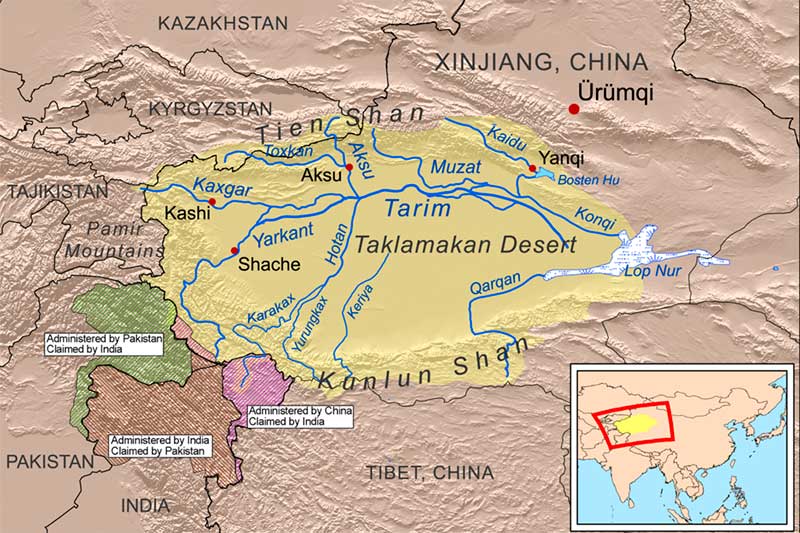
Cannabis spread and traveled along the trade routes of Central Asia and, about four thousand years ago, reached the Sea of Japan to the east and the Middle East to the west.
The hemp plant was originally used to make ropes and textiles, although it is unlikely that its medicinal properties went unnoticed. Its consumption in search of psychoactive effects is documented at least more than five thousand years ago.
It is known that the Scythians, fierce mounted warriors who came from the territory where cannabis originated, inhaled the smoke produced by seeds thrown onto embers, a custom they carried during their campaigns as far as Eastern Europe: Russia and Ukraine.
From a cultural point of view, the most significant route of marijuana was the one it took southward, settling in the Himalayan mountain range, in the regions now occupied by Tibet, Nepal, and Bhutan, also spreading its plantations along the southern slopes of the range, in India, where its ancestral cultivation has survived to this day.
Its arrival on the Mediterranean coasts
In the seventh century, Muslim expansion spread the plant along the southern shore of the Mediterranean as far as the Atlantic and the Iberian Peninsula.
It is known that, in the Arab Empire between the 7th and 13th centuries, hashish was consumed for pleasure, and the relationship between marijuana and the two main branches of Islam is noteworthy. While Shiites reject psychoactive substances, Sunnis sometimes use it in pursuit of a direct relationship with divinity.
The sailors of the Sultanate of Oman, companions of Sinbad the Sailor, who dominated the trade routes of the Indian Ocean, spread the use of cannabis along the east coast of Africa, from notable ports such as Mombasa and Zanzibar, before reaching present-day South Africa in the 15th century.
From the African coasts, marijuana began its journey to America in the 17th century, entering through Brazil and moving inland to colonize the Andean mountain range, then heading toward Central America, which received it in the 19th century. Around the same time, it also reached the Caribbean by another route, traveling with slave traders from the Gulf of Guinea.
The great leap into the southern United States occurred in 1911, when it welcomed Mexicans fleeing the revolution. From there it conquered the country that today perhaps has the largest number of consumers in the world.
The path of marijuana has left a trail of close relationships with medicine, religiosity, and the arts. The Himalayas saw the birth of Hinduism, and it is well known that one of its principal gods, Shiva, is known as the Lord of bhang, the cannabis-based drink made with milk, sugar, and spices that is still prepared in India, China, Thailand, and Burma.
This drink is sold in Benares and in the cities of Rajasthan and is consumed during Holi, the country’s most colorful popular festival.
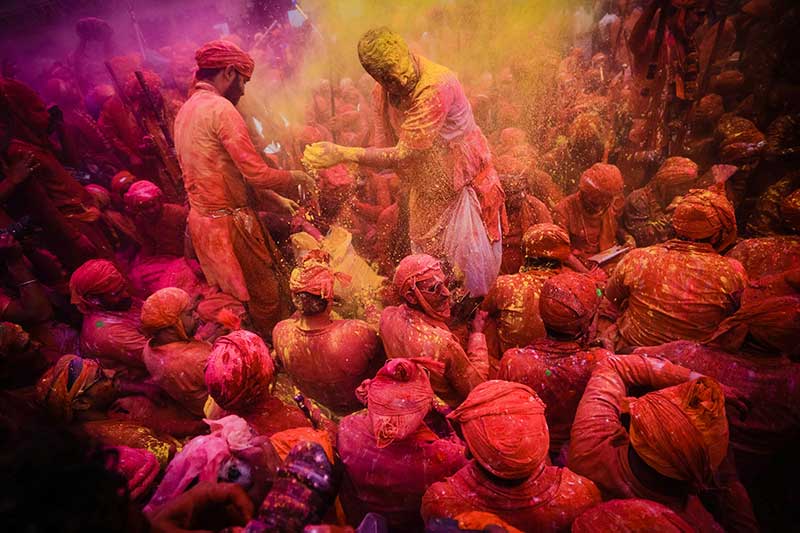
Foto de bhupesh pal en Unsplash
It is well known that Hindu holy men consume charas, a concentrated marijuana resin, which they use to promote states of intense mysticism.
In many monasteries, balls of charas can be seen among the offerings, and the best are believed to come from plants in Kashmir and the Parvati Valley, although it is also cultivated in remote villages three thousand meters above sea level.
When hippies visited India, they tried charas smoked in the traditional clay pipe, the chilum, and from there they spread its use to the West.
All religions following Hinduism—Buddhism, originating in India, and the neighboring Chinese Taoism—maintained the ritual use of marijuana, which in the 7th century became incorporated into the tantric traditions of Tibet and Nepal.
Nepal is a jewel set in the Himalayas, where it is a pleasure to go high-altitude trekking and observe marijuana growing spontaneously on the mountain slopes.
According to many scholars, even early Christianity does not escape suspicion of a link with the plant’s active compounds, as it is believed that anointing oils contained cannabis and that it may have influenced some miraculous healings.
The Rastafarian movement, which emerged in Jamaica in the 1930s among the American descendants of African slaves, has a strong religious inspiration and is closely connected to the consumption of ganja, the local name for marijuana adopted from India.
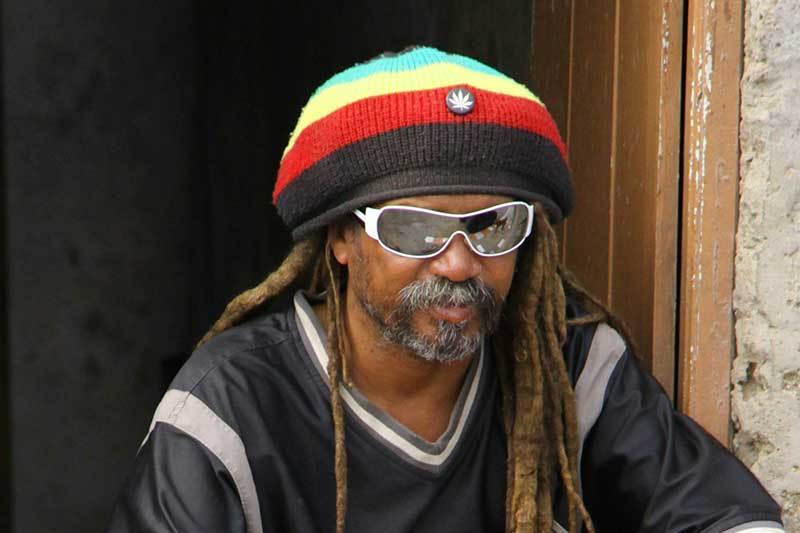
Foto de Nick Fewings en Unsplash