

The silent presence of cannabis can be found in many cultures, where spirituality has taken on unique forms or has become deeply interwoven with everyday life. The places where its cultivation has endured form a collection of destinations of great intrinsic interest.
What they all have in common is their distance from conventional routes: remote landscapes, perched in the most inaccessible mountain ranges on the planet where mystical religions are practiced, or deep within jungles where animism has deep roots. Their appeal to travelers lies in discovering places of extraordinary beauty and societies anchored in ancestral ways of life.
A journey through numerous exotic landscapes
The journey should begin in the cradle of the hemp plant, in the arid deserts of Central Asia, still little visited by Western travelers. China is opening up its northwestern territories—areas that tourism has yet to transform.
It is now possible to access the Qinghai Plateau and the Xinjiang Uyghur Autonomous Region, with their vast, almost empty landscapes, ranging from the rolling grasslands of Inner Mongolia to the towering dunes of the Taklamakan Desert and the Himalayan mountains. Not to mention that the Silk Road has one of its harshest stretches in this area, with fascinating stops in Hotan and Kashgar.
The train may be the best way to reach Tibet from Qinghai, along a route of incomparable beauty and great technical difficulty. Despite the risks imposed by altitude and the challenges of obtaining travel permits, Tibet offers a profound immersion in the spirituality of Buddhist monasteries perched on sacred mountains, in a territory ideal for high-altitude trekking.
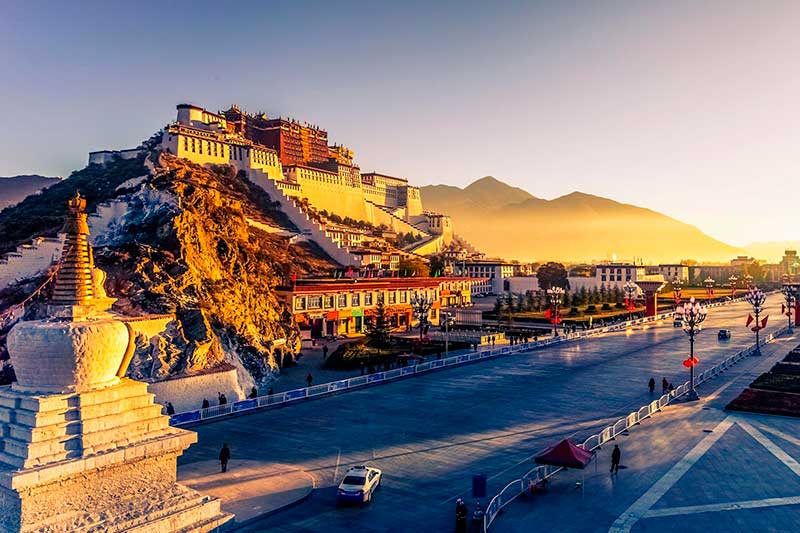
Tibet offers a profound immersion in the spirituality of its Buddhist monasteries.
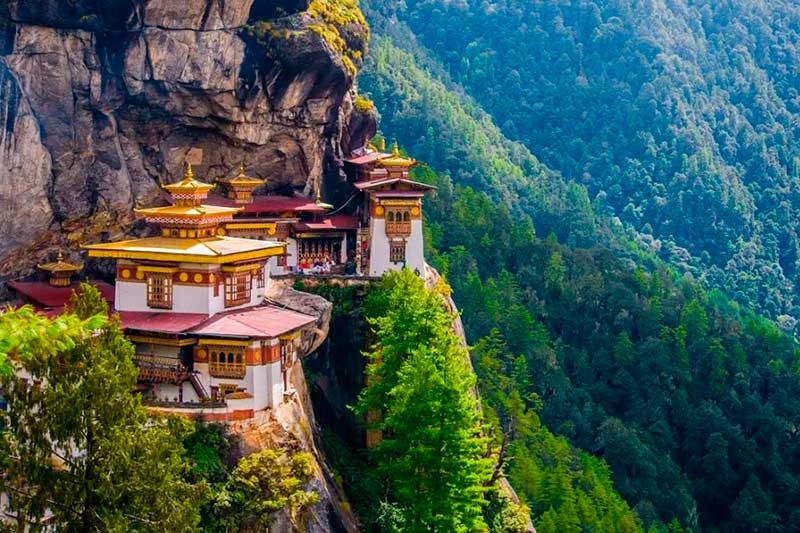
In the small Kingdom of Bhutan we also find a powerful presence of Buddhism.
The same majestic nature and a similar culture can be found in the small Kingdom of Bhutan, with a strong presence of Buddhism and a high—and exotic—Gross National Happiness index.
Nepal is the other jewel embedded in the Himalayas, with the beautiful Kathmandu Valley and excellent trekking routes along slopes where cannabis plants grow spontaneously.
From Kashmir to Africa
The white peaks of the Himalayas crown the landscapes of northern India, with their southern slopes dotted with monasteries. The Kashmir Valley is one of the most beautiful places on the continent, with its fertile lands watered by meltwater, Buddhist temples in Ladakh—known as Little Tibet—and Hindu monasteries in the Jammu region.
Despite having a Muslim majority, it is also land of the Sikhs, among them the Nihang groups of pacifist warriors who consume sukha parshaad, a drink containing cannabis that helps them draw closer to their god, whom they worship at the Golden Temple in Amritsar, in neighboring Punjab.
The journey continues along the west coast of India, visiting the ports once frequented by ancient Omani ships based in Muscat, which traded in the wonderful lake landscapes of Kerala, at the southern tip of India. This region is famous for producing an extraordinary cannabis, Kerala Gold, and is one of the country’s most distinctive states due to its beauty and high level of human development.
Kerala Gold (also known as Mahadevan or Neela Chadayan) is the name given to a cannabis strain originating in Idukki, in the state of Kerala in southern India. It is internationally recognized as one of the finest cannabis varieties in Asia.
The same Omani sailors introduced marijuana to the African coast of the Indian Ocean, near what are today three countries—Kenya, Malawi, and South Africa—which are important cultivators.
Along the vast Indian Ocean coastline, several relics of the Swahili culture of Muslim seafarers are preserved. The unspoiled Lamu Archipelago, in northern Kenya, with its islets of deserted, pristine beaches where dhows—the old wooden boats with triangular sails—still come ashore.
In southern Kenya, the bustling city of Mombasa preserves its old town on a coastal island defended by the sea, much like the fascinating Zanzibar Archipelago, off the coast of Tanzania, which offers immense natural beauty and reveals in Stone Town a fragment of Arabia in the heart of the African Indian Ocean.
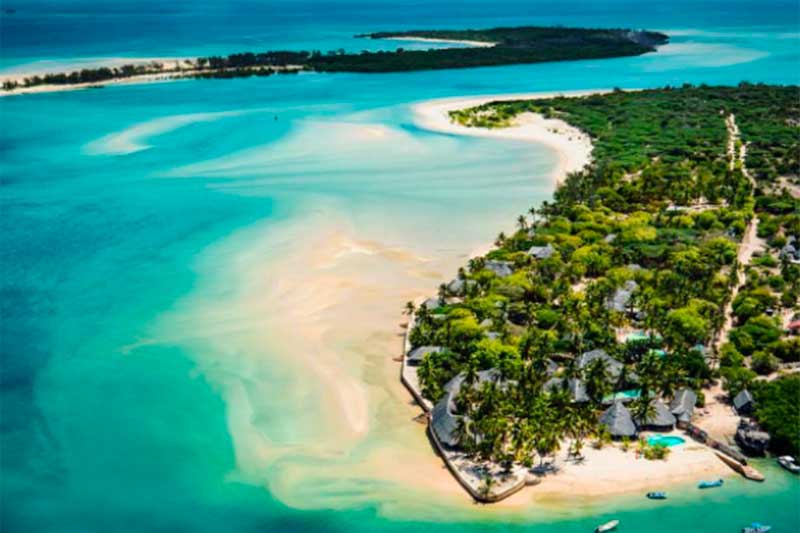
The Lamu archipelago in northern Kenya, with its islets of deserted virgin beaches, is a true delight for the senses.
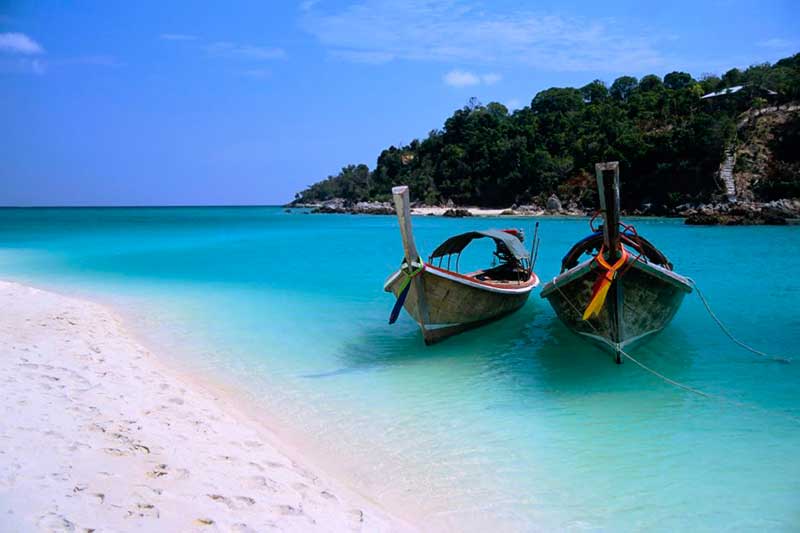
The fascinating archipelago of Zanzibar, near the coast of Tanzania, offers us immense natural beauty.